Showing posts with label special operations. Show all posts

10 July, 2017

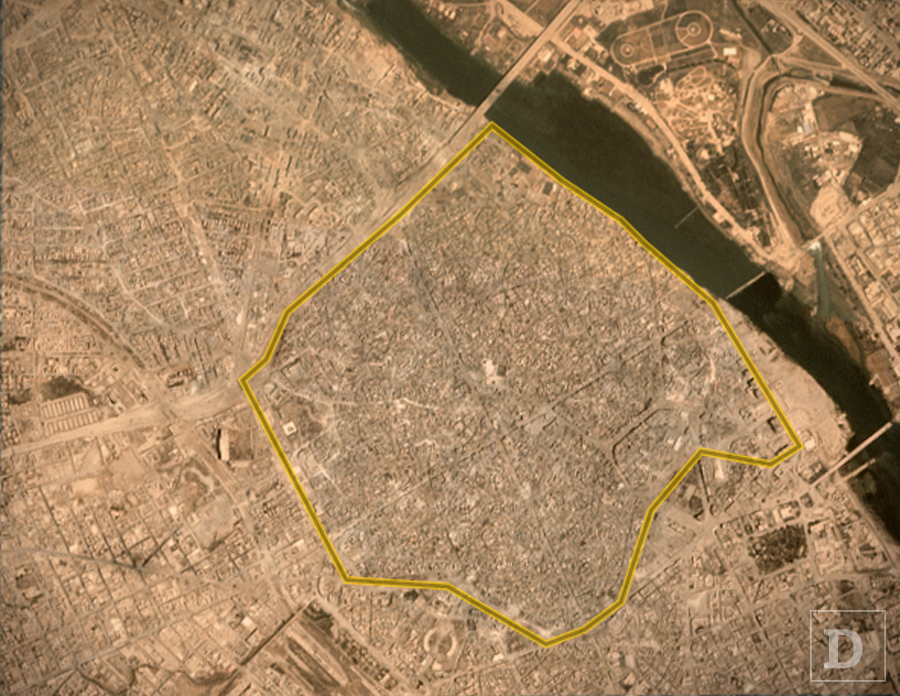
What the Largest Battle of the Decade Says about the Future of War


Mosul has some interesting lessons.  But we shouldn't get too focused on this one case.  Urban warfare is in transition.

I was interested in the over-reliance on special forces in the first stage of the war.  They're good, but but they're expensive, and grabbing and holding territory is not their job.  This looks like the sort of mistake the US might make with its own forces.

Most important: this is not over.  Daesh is not defeated.  It isn't even driven out of all the territory it holds.  And a coalition is most likely to fall apart when people are more worried about the post-war environment than they are in finishing off the original enemy.


What the Largest Battle of the Decade Says about the Future of War

10 March, 2012

Fighting the hidden war

SOCOM II .308
SOCOM II .308 (Photo credit: ~Steve Z~)

The Long War is far from over.  It is, however, being fought differently. And despite whatever you may have heard, it's expanding.  In a year, American forces have conducted "engagements in more than 100 countries worldwide."

First, look at the numbers: tell me your budget, and tell you what you care about.  With that in mind, here's the numbers, courtesy of Defense Industry Daily.  Although the Army has the greatest reductions in funding for combat operations (logical, figuring the drawdown from Iraq), its baseline spending does surprising well in relation to the other armed services.
DoD FY12 vs FY13, by Department

And how about by function?  Again, the numbers tell a story.  Oddly enough, although overall military personnel spending is down, it shows an astonishing increase under OCO, as does the ever-popular "Other".  The increases are more than balanced by cuts in OCO operations, procurement, and R&D, so the total under OCO hides an important story.  Clearly something is going on here.

 DoD FY12 vs FY13

So what is it?  My first guess is (a) Special Operations Forces, and (b) drones.  It fits the numbers, and recent public statements.  Anyone have a better idea?

There are other reasons to focus on a growing SOF budget. Special Operations Forces, like drones, allow an administration to run a war with minimal visibility.  Big armies are expensive--not only in terms of money and lives, but in terms of political risk.  Politicians would rather mobilize and use the Leviathan Force (to use a term coined by Thomas P.M. Barnett) as a last resort.  It's so much better to send robots, or small teams of SOF.
Emblem of Air Force Special Operations Forces ...
Image via Wikipedia

Besides, we have word of those who know.  Admiral McRaven, commander of SOCOM, testified to the Senate Armed Services Committee last week on what the Special Operations Forces are doing:
The direct approach is characterized by technologically-enabled small-unit precision lethality, focused intelligence, and interagency cooperation integrated on a digitally-networked battlefield…. Extreme in risk, precise in execution and able to deliver a high payoff, the impacts of the direct approach are immediate, visible to the public and have had tremendous effects on our enemies’ networks throughout the decade.

However, the direct approach alone is not the solution to the challenges our Nation faces today as it ultimately only buys time and space for the indirect approach and broader governmental elements to take effect. Less well known but decisive in importance, the indirect approach is the complementary element that can counter the systemic components of the threat.

The indirect approach includes empowering host nation forces, providing appropriate assistance to humanitarian agencies, and engaging key populations. These long-term efforts increase partner capabilities to generate sufficient security and rule of law, address local needs, and advance ideas that discredit and defeat the appeal of violent extremism.
What I find most interesting, though, is his statement that SOF are engaged in "more than one hundred countries worldwide."

Think about that for a second.  There are 193 member states of the United Nations.  Call it two hundred countries.  American SOF, "throughout the year... conducts engagements in more than 100 countries worldwide." They are operating, one way or another, with or without the permission of the local government, against some perceived threat to American interests in over half the countries on earth.

And for the most part, people either don't know or don't care.  That's part of the point of using those kinds of forces.  But if there are that many enemies mobilized against us, in so many places, is it inappropriate to ask the question: could we be doing something wrong?
13 January, 2012

Paging Jason Bourne

Map showing ethnic and religious diversity amo...
Image via Wikipedia
Every so often the curtain parts and one sees the world is a lot more like a spy movie than most people want to believe. Memos have leaked from the the CIA describing a "false flag" operation by the Israelis, directed against Iran, in which an anti-Iranian terrorist group was told they were being sponsored by the Americans. In this world, you can never be entirely sure who you are working for, or with. And once discovered (during W's administration), what was the reaction?
The CIA memos of the incident have been "blue bordered," meaning that they were circulated to senior levels of the broader U.S. intelligence community as well as senior State Department officials.
What has become crystal clear, however, is the level of anger among senior intelligence officials about Israel's actions. "This was stupid and dangerous," the intelligence official who first told me about the operation said. "Israel is supposed to be working with us, not against us. If they want to shed blood, it would help a lot if it was their blood and not ours. You know, they're supposed to be a strategic asset. Well guess what? There are a lot of people now, important people, who just don't think that's true."
False Flag - By Mark Perry | Foreign Policy

17 December, 2011

A few "secrets"

This is stuff I've already seen in the public domain, but the article at Danger Room does a good job of summing up some of the "secret" military and intelligence programs most people don't hear about.

I gotta wonder what hasn't been revealed (yet).

17 November, 2011

"Seal Team Geronimo" is a big fat lie

Can I be any more clear about this? The sources suck, the analysis is self-serving, and the conclusions--particularly in regard to WMD--are insupportable.
Or let's get another opinion--from Danger Room:
Author Chuck Pfarrer is taking flack over his account of the Osama bin Laden raid in his new revisionist history, SEAL Target Geronimo. But that’s overshadowed another big problem with the book: Pfarrer’s claims about Iraq’s weapons of mass destruction are absolutely bananas.
To read SEAL Target Geronimo is to get sucked into a vortex of WMD insanity. Pfarrer says that Saddam Hussein had dangerous, active chemical, biological and nuclear programs up until the day of his downfall. Worse, those weapons made it into the hands of Osama himself. Why didn’t you know about it? Because craven politicians and the lying media hid the truth about what U.S. military weapons experts uncovered.
Well, sorry, Charlie. I was one of those military experts in Iraq. I learned the full, underwhelming truth about Saddam’s programs because I was there to help the Iraqis settle the issue once and for all. And SEAL Target Geronimo’s claims are the literary equivalent of a smoking gun that could have been a mushroom cloud — a paranoid, evidence-free fantasy, fueled by ignorance.
Start with all that Iraqi WMD that U.S. forces found. Pfarrer gasps over an Explosive Ordnance Disposal unit’s 2003 discovery of an artillery shell filled with the nerve agent sarin, part of an early homemade bomb. To Pfarrer, that bomb would have “spread a mortal, invisible cloud over a dozen city blocks” where “death would have come quickly for ten thousand Iraqi civilians living near the airport and three thousand coalition troops stationed at nearby Camp Victory.” If two of those sarin-laced bombs went off in a crowded football stadium, it would have caused more casualties than “those suffered by the United States during the entire Vietnam War.” His emphasis.
Absolutely none of this is plausible. You’re talking about a piece of steel that needs to survive being fired out of an artillery piece, and then burst apart by explosives in order to disseminate the chemicals inside. Much of the chemical material is destroyed in the process. And it would take a lot of sarin to achieve any deadly effect. Saddam’s vicious gassing of the Kurds at Halabja in March 1988, for example, was a coordinated military campaign lasting for two days. During that time, the Iraqis murdered up to 5,000 people — nowhere near Pfarrer’s stadium scenario. An actual chemical artillery round might — might — kill dozens. Not thousands.
This sounds a lot more plausible to me. If the rest of the book is as inaccurate as this--and so far as I've seen, it seems to be--I can only wonder about the agendas of those promoting and publishing it.